

There is something deeply satisfying about the moment a patient steps through the door of my clinic and realises — sometimes only then, when it is already too late to turn back — that they have surrendered control entirely. Not partially. Not with conditions. Entirely. That is the foundation of everything I do here. That is the essence of what I call medical BDSM, and it is the reason you keep coming back, even when you tell yourself you should not.
I am Mistress Katharina Amara. I have been practising femdom medical BDSM for years, and I have built this clinic — this space, this atmosphere, this ritual — with one purpose in mind: to take the clinical environment, with all its cold authority and sterile precision, and turn it into the most intimate, the most unsettling, and the most liberating experience a submissive can endure. You are not a patient here in the traditional sense. You are a subject. My subject. And you will be treated accordingly.
Let me tell you what happens in these rooms. Let me tell you what I think of the people who come to me, and why, despite everything, I continue to receive them.
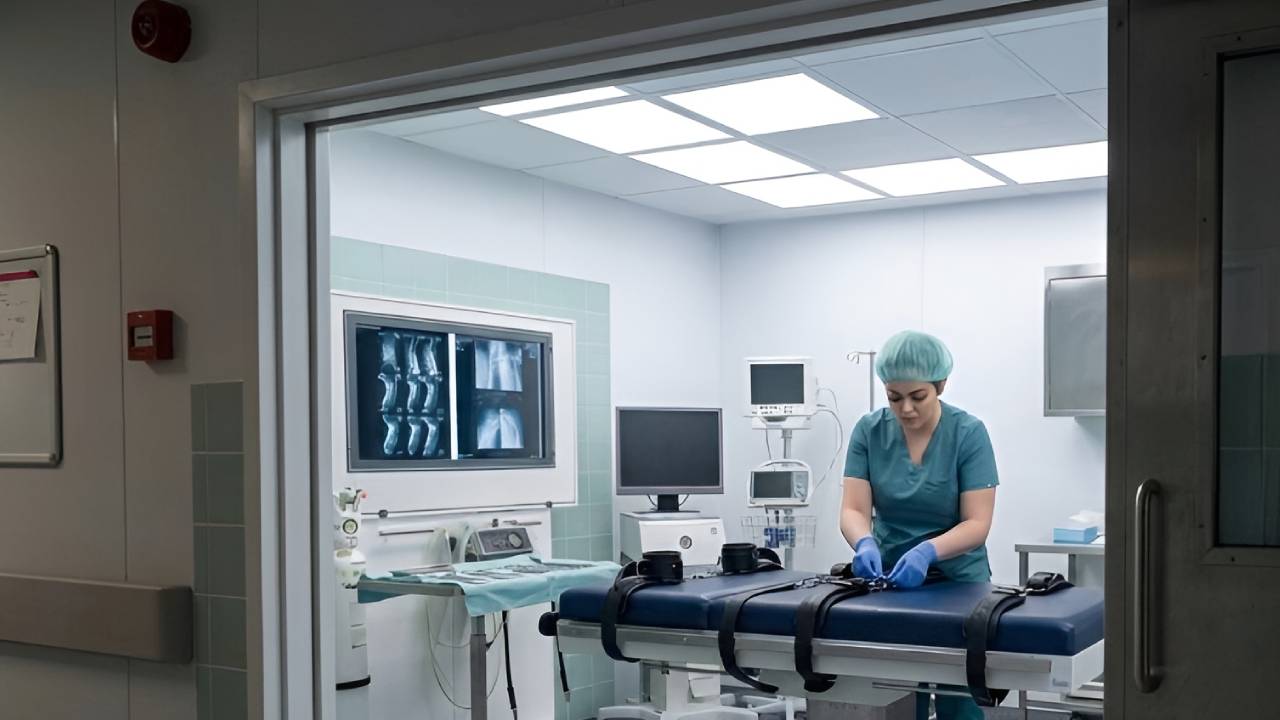
The Clinic Is Not a Safe Space — It Is My Space
People often misunderstand the nature of a medical BDSM environment. They imagine something theatrical, something dressed up in latex and stethoscopes for the sake of aesthetics. What I offer is something far more considered, far more precise, and — if I am honest — far more cruel in the most consensual and deliberate sense of the word.
My clinic is designed to disorient. The smell of antiseptic, the white light, the instruments laid out with surgical care on a steel tray — none of it is decoration. It is architecture. It is the construction of a psychological state in which the submissive is reminded, at every sensory level, that they are no longer in the world they came from. They are in mine.

Medical BDSM play is not simply about props. It is about the transfer of authority. The doctor, the nurse, the anaesthetist — these figures carry enormous cultural weight. They are people we are conditioned to obey, to trust without question, to expose ourselves to without hesitation. In my clinic, I inhabit that authority completely, and I use it. I use it to strip away the last defences of the people who come to me convinced they are in control of their own desires. They are not. They never were. They just needed the right environment to understand that.
What I Think of My Fetishist Patients
I will be direct with you, because that is one of the few courtesies I extend. The men and women who arrive at my door with their medical BDSM fantasies are, in many ways, deeply predictable. They have spent years curating their desires in private, constructing elaborate scenarios in their minds, and then they walk into my clinic and immediately begin trying to manage the experience. They want to negotiate the edges. They want to feel in control of their own surrender.
I find this both amusing and, frankly, a little pathetic.
Not because their desires are unworthy — they are not. The anesthesia fetish, the compulsion toward restraint, the need to be rendered helpless by someone who holds absolute authority: these are not trivial things. They are profound. They speak to something deep in the architecture of the human psyche. But the attempt to manage them, to keep one foot in the ordinary world while dipping the other into mine — that is where the weakness shows.
My job, as I see it, is not to accommodate that weakness. It is to dissolve it. When you are in my clinic, you do not negotiate. You submit. And if you find that difficult, if you find yourself resisting, then you are precisely where you need to be.
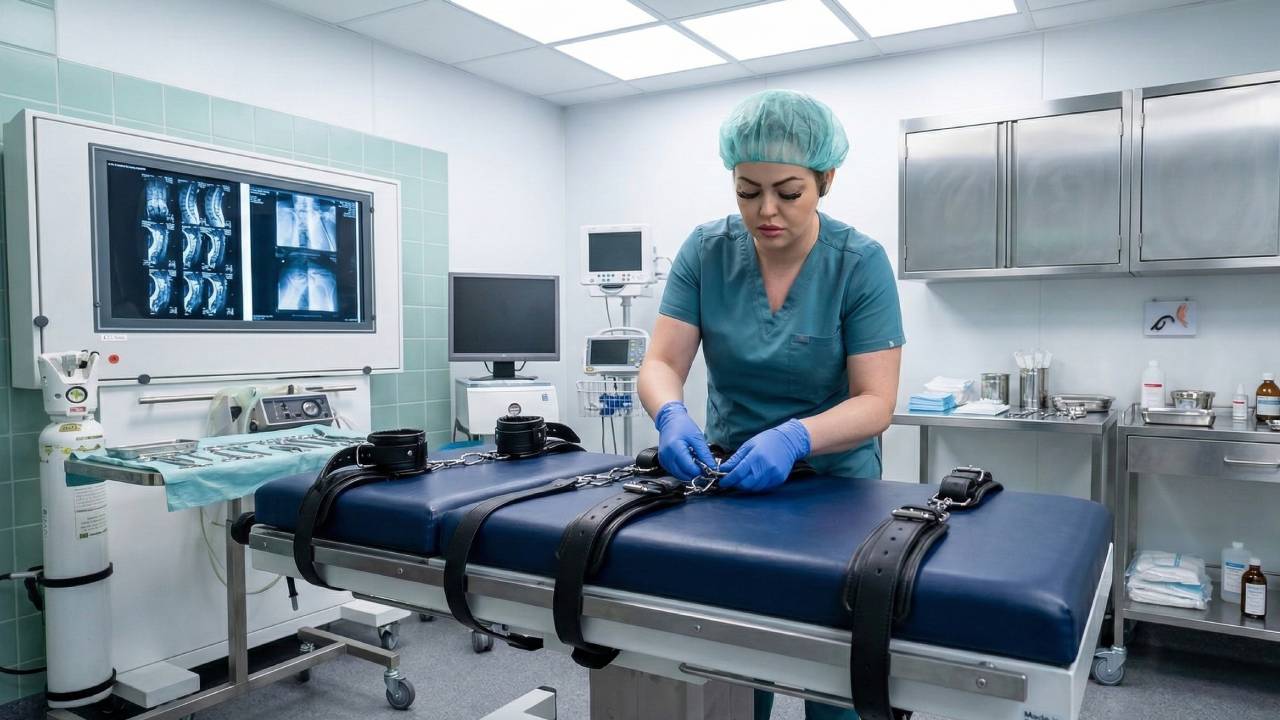
The Art of Restraint: BDSM Medical Bondage
Before anything else happens in my clinic, there is the question of stillness. A subject who can move is a subject who can resist, and resistance — while occasionally entertaining — is ultimately counterproductive to the work I intend to do.
BDSM medical bondage is, in my practice, both functional and ceremonial. The restraints are not punitive. They are clarifying. When I secure a patient to the examination table — wrists, ankles, sometimes the torso, depending on what I have planned — I am not punishing them. I am removing the last physical illusion of agency. What remains after that is pure psychology, and that is where the real work begins.
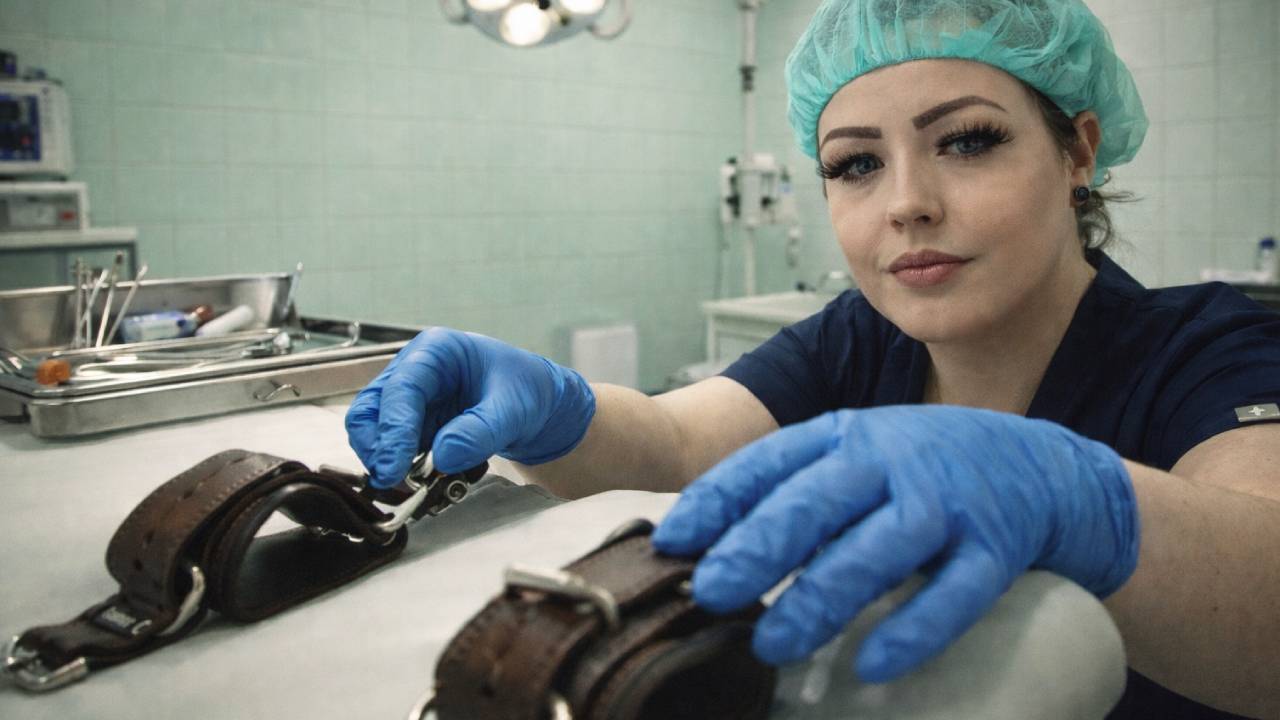
I am meticulous about this. The positioning matters. The tension of the restraints matters. Whether the subject can see what is on the tray beside them, whether they can hear me moving around the room — all of it is deliberate. BDSM medical bondage in my hands is not about restriction for its own sake. It is about creating a specific quality of attention. When you cannot move, you listen differently. You feel differently. Every sound, every touch, every pause in my movements carries a weight it would not carry otherwise.
I have had patients tell me, afterwards, that the restraints were the most intimate part of the session. Not the most intense — the most intimate. Because there is a particular kind of trust required to allow yourself to be truly immobilised by another person. Even when — especially when — that person is someone like me.
The Mask, the Gas, and the Edge of Consciousness
Now we arrive at the part of my practice that I find most fascinating, and that my patients find most terrifying. Which is, of course, precisely why they request it.

The anesthesia mask is one of the most psychologically loaded objects in my clinic. It is simple, clinical, unremarkable in a hospital context. In mine, it is something else entirely. The moment I bring it close to a subject’s face, something shifts. The breathing changes. The eyes change. Whatever composure they had assembled for themselves begins to fracture.
This is not an accident.
The anesthesia roleplay I conduct is not about replicating a surgical procedure. It is about inhabiting the psychological territory that surrounds the idea of anaesthesia — the surrender of consciousness, the absolute vulnerability of a body that cannot resist, the trust (or the absence of it) placed in the hands of the person holding the mask. These are not small things. They are enormous. And I treat them with the seriousness they deserve.
When I conduct anesthesia roleplay with a subject, I am working with one of the most primal fears and desires in the human experience: the fear of losing control of one’s own mind, and the desire — equally primal, equally powerful — to have that control taken by someone worthy of holding it. The mask becomes a symbol of that transaction. The breath that passes through it becomes the medium through which the power exchange is made physical.
I have seen grown men weep behind that mask. Not from pain. From relief.
The Anesthesia Fetish: What It Reveals About You
The anesthesia fetish is, in my experience, one of the most misunderstood of all the desires that fall under the umbrella of femdom medical BDSM. People who do not share it tend to find it baffling, even disturbing. People who do share it often find it difficult to articulate, even to themselves.
Let me offer my perspective, for what it is worth — which, in my clinic, is considerable.
The desire to be anaesthetised, to be rendered unconscious or semi-conscious, to be at the absolute mercy of another person’s decisions — this is not a death wish. It is not a symptom of self-destruction. It is, at its core, a desire for total release. The world we inhabit demands constant vigilance, constant performance, constant management of the self. The anesthesia fetish is a response to that exhaustion. It is the fantasy of a moment in which all of that is simply — stopped.
And who stops it? Someone with authority. Someone with knowledge. Someone who has earned, through their presence and their competence and their absolute refusal to be anything other than what they are, the right to hold that much power over another person. That is what I am. That is what I offer.
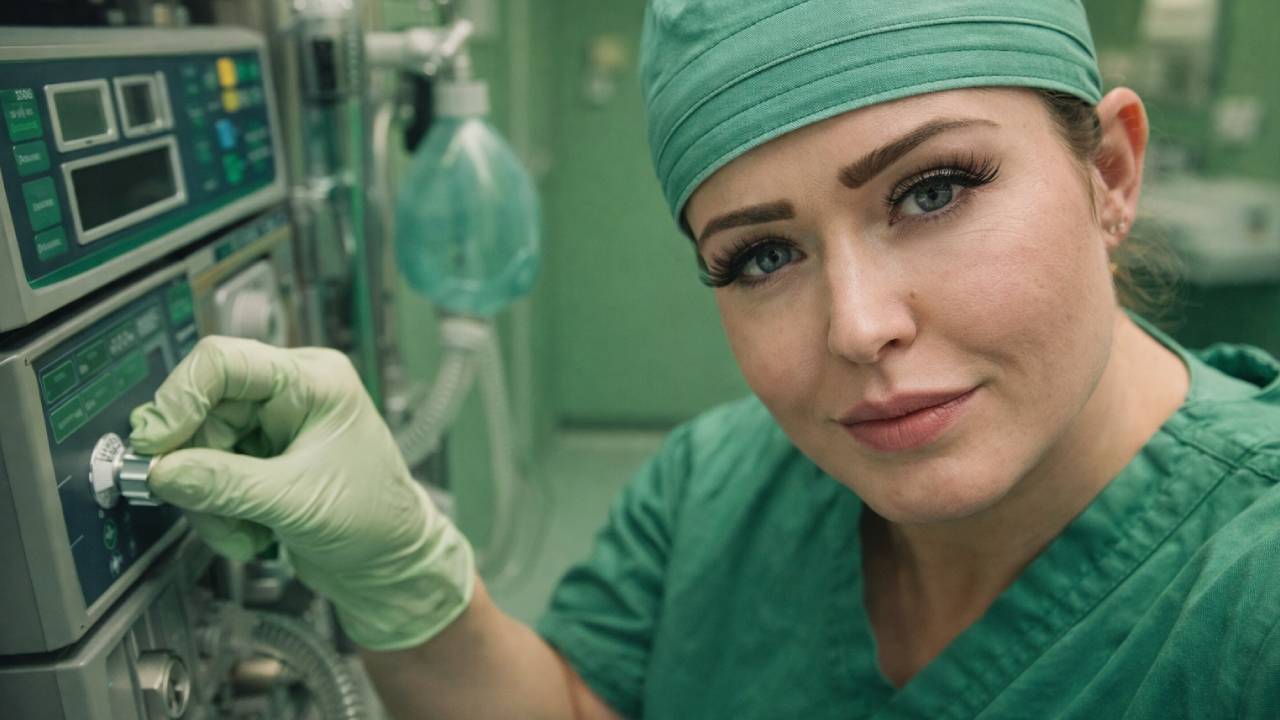
I do not offer comfort. I do not offer reassurance. I offer precision, control, and the particular satisfaction of being seen — truly seen — by someone who is not impressed by your defences, because I have already decided to remove them.
What a Session in My Clinic Actually Looks Like
I am asked this question often, usually by people who are trying to determine whether they are brave enough to come. The answer, of course, is that they are not — and they should come anyway.
A session in my clinic begins long before you arrive. It begins with the correspondence, the negotiation of limits, the careful construction of the scenario. I am thorough in this. Medical BDSM play at the level I conduct it requires preparation, and I do not improvise where precision is possible.
When you arrive, you will be received as a patient. You will be given instructions. You will follow them. The examination begins — and here, “examination” means something far more comprehensive than the word suggests in an ordinary context. I am examining your psychology as much as your body. I am reading the way you hold yourself, the way you respond to instruction, the way your breathing changes when I pick up a particular instrument.
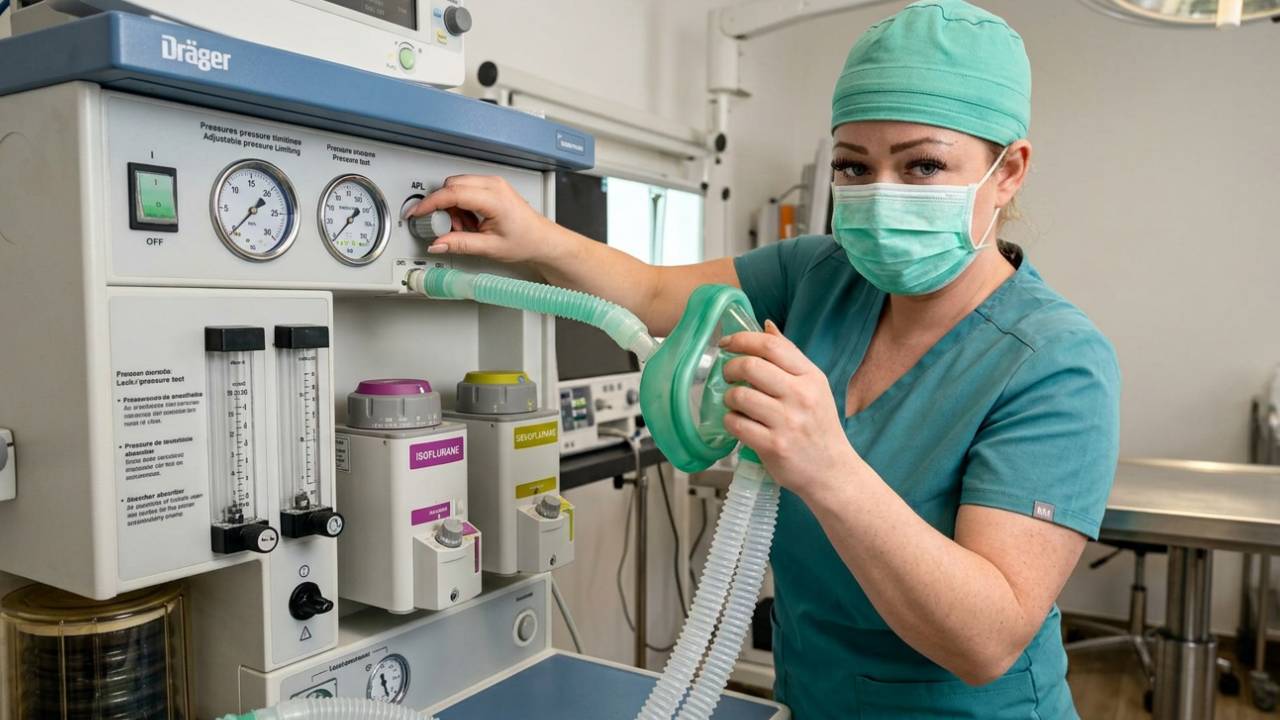
The restraints come when I decide they are needed. The anesthesia mask is introduced when I judge the moment is right — not when you expect it, not when you are prepared for it, but when the psychological conditions are optimal. This is not cruelty for its own sake. It is craft.
Throughout the session, I maintain complete authority. I speak when I choose to speak. I am silent when silence serves my purpose better. The anesthesia roleplay elements are woven into the session as a continuous thread, not a discrete event — the suggestion of unconsciousness, the proximity of the mask, the particular quality of helplessness that comes from bdsm medical bondage combined with the knowledge of what I am capable of doing.
By the end, most subjects are not the same people who walked in. That is the point. That is always the point.
On the Question of Trust
I am aware that everything I have described requires an enormous degree of trust. I am also aware that I have spent most of this post making clear that I have very little patience for the weakness of my patients, that I find their attempts at control amusing, that I intend to dissolve whatever defences they arrive with.
These two things are not contradictory.
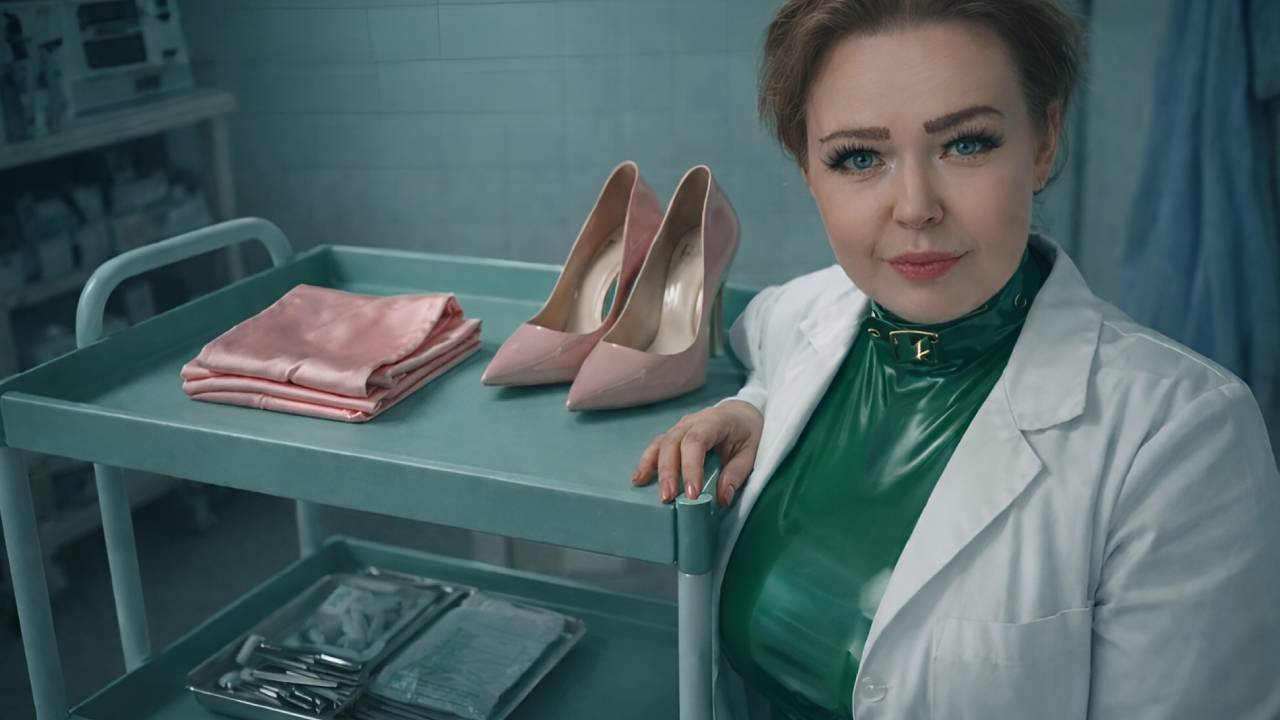
Trust, in the context of medical BDSM, is not the same thing as comfort. It is not the warm, reassuring trust of a friend or a therapist. It is something harder and more demanding. It is the trust you extend to someone who is genuinely more capable than you in this specific territory — someone who knows what they are doing, who has thought carefully about what they intend to do, and who will not be deterred by your discomfort from doing it correctly.
That is the trust I ask for. And it is, I would argue, the most honest form of trust there is. There is no pretence in it. You know exactly what you are walking into. You know that I will not be gentle simply because you are frightened. You know that the anesthesia fetish scenario you have been carrying around in your imagination for years will be handled not with indulgence, but with authority.
And you come anyway.
That, more than anything else, is what I find compelling about the people who seek out femdom medical BDSM. Not their weakness — though that is certainly present. But the courage it takes to pursue something this honest about what they need.
The Clinic Awaits
I do not advertise widely. I do not need to. The people who find me are the people who are ready to be found — the ones who have exhausted the ordinary world’s capacity to give them what they are looking for, and who have finally accepted that what they need exists in a place like this.
If you are reading this and recognising yourself in these words — in the desire for restraint, for the cold authority of the clinical environment, for the particular terror and relief of the anesthesia mask, for the total surrender that medical BDSM play at its finest demands — then you already know what to do.
The table is ready. The instruments are laid out. The restraints are waiting.